Ħobż biż-Żejt (Maltese Tomato and Tuna Sandwich)
Make Malta's iconic ħobż biż-żejt: crusty bread with kunserva, olive oil, tuna, capers, onion, tomato, olives, and optional traditional fillings.
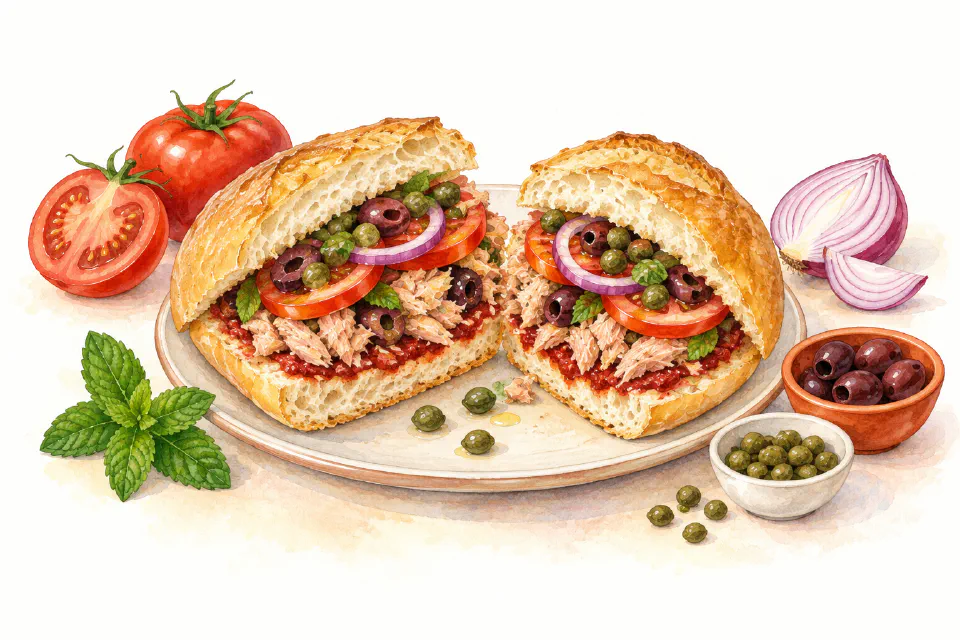
Ingredients
Have your ingredients ready? Go to instructionsInstructions
- Prepare the fillings: Drain the tuna, rinse and drain the capers, and slice the onion and tomato. Prepare only the optional toppings you want to use.
- Prepare the bread: Slice each roll horizontally. Leave the crumb in place so it can absorb the tomato and oil. Drizzle the cut surfaces lightly with olive oil.
- Spread the kunserva: Spread a thin layer of kunserva or tomato paste over the cut surfaces, working it gently into the crumb. If using bigilla, spread it over the kunserva.
- Add the fillings: Divide the tuna, capers, onion, fresh tomato, olives, and herbs between the rolls. Add any beans, ġbejna, lettuce, or egg in an even layer. Season lightly with salt and black pepper, then finish with the remaining olive oil.
- Press and serve: Serve open-faced or close each sandwich and press gently so the flavours soak into the bread. For a softer, juicier sandwich, wrap it and rest for 10-15 minutes before eating.
What Is Ħobż biż-Żejt?
Ħobż biż-Żejt literally means “bread with oil.” In Malta, the name describes crusty bread dressed with olive oil and tomato, then served with a flexible choice of fillings. Tuna, capers, olives, onion, beans, bigilla, and ġbejna are among the familiar additions; there is no single compulsory combination.
The unaccented spellings hobz biz zejt and hobz biz-zejt refer to the same dish. You may also see a filled ftira described as ftira biż-żejt. Ftira is the bread, while ħobż biż-żejt is the preparation of bread with oil, tomato, and toppings.
Ingredient Guide
- Bread: A Maltese ftira or ħobża has the sturdy crust and open crumb needed to hold the oil and juicy filling. Use it fresh, not toasted, for this version.
- Kunserva: This concentrated Maltese tomato paste is spread thinly into the bread. It is sweeter and more seasoned than some ordinary tomato pastes, so taste before adding salt.
- Olive oil: Use an olive oil you enjoy eating uncooked. Add some before the filling and a little at the end so the bread is flavoured without being drenched.
- Tuna: Tuna packed in olive oil gives a rich filling. Use one 160g tin, drain it, and break it into flakes rather than mashing it; the tin weight is before draining.
- Capers, olives, and onion: These bring salt, acidity, and crunch. Rinsing the capers prevents them from overwhelming the sandwich.
- Mint or basil: Either herb freshens the tuna and tomato. Mint gives the sandwich a particularly summery character.
Traditional Fillings and Variations
Treat the optional ingredients as choices rather than a checklist. For a fuller tuna sandwich, add well-drained butter beans or broad beans. Fresh or peppered ġbejna adds a creamy or tangy note, while Bigilla makes the filling earthier. A sliced hard-boiled egg or shredded lettuce can make it more substantial.
Tuna is common but not essential. For a meat-free ħobż biż-żejt, omit it and combine tomato, capers, olives, beans, ġbejna, or bigilla. Anchovies are another traditional salty addition. Taste before seasoning whenever you use capers, olives, anchovies, or peppered cheese.
Ingredient Substitutions Outside Malta
The ftira guide explains Maltese bread choices and offers more sandwich filling combinations.
If Maltese bread is unavailable, choose a crusty loaf or roll with a firm, open crumb, such as plain sourdough or ciabatta. Avoid a very soft sandwich loaf, which can collapse under the tomato and oil. You can also make our Maltese-style bread and use thick slices.
Replace kunserva with a thin layer of concentrated tomato paste, adjusting the seasoning to taste. Feta is not the same cheese as ġbejna, but a mild feta can provide a practical salty cheese option outside Malta. See the Maltese ingredient guide for more detail on kunserva and tomato products.
Tips for the Best Maltese Tuna Sandwich
Allow 15 minutes to prepare and assemble the sandwiches with ready-baked bread. The optional 10-15 minute wrapped rest is extra. Baking your own bread or cooking an optional egg also takes additional time.
- Drain wet ingredients well so the sandwich becomes juicy rather than watery.
- Spread the kunserva and oil to the edges, but keep both layers thin at first; you can add more oil after tasting.
- Slice the onion thinly and keep the tomato layer even so the filling stays in the bread.
- Do not overfill every optional topping at once. A balanced sandwich is easier to close and eat.
- For a packed lunch, wrap the closed sandwich tightly and let it rest for 10-15 minutes. The crumb will absorb the tomato and oil while the crust keeps some structure.
How to Serve Ħobż biż-Żejt
Serve it open-faced as a snack or closed as a portable lunch. It is especially associated with beach days, boat trips, and quick summer meals. For a Maltese spread, add Bigilla, Kapunata, olives, and extra bread.
Making Ahead and Storage
For the best texture, prepare the vegetables and drain the tuna in advance, then assemble shortly before serving. Keep the prepared fillings covered in the fridge and do not leave tuna or egg at room temperature for more than two hours. Once assembled, refrigerate leftovers and eat within 24 hours; the bread will soften as it sits.
Frequently Asked Questions
Is Ħobż biż-Żejt the same as ftira?
No. Ftira is a type of Maltese bread. Ħobż biż-Żejt is bread prepared with olive oil, tomato, and toppings, and ftira is one of the breads you can use. Our ftira guide compares the sandwich with baked Ftira Għawdxija.
What does hobz biz zejt mean?
It means “bread with oil” in Maltese. Hobz biz zejt is the common keyboard spelling of ħobż biż-żejt, written without Maltese diacritics.
Does Ħobż biż-Żejt always contain tuna?
No. Tuna is a popular filling, but the dish varies by household and occasion. Tomato, olive oil, capers, olives, onion, beans, anchovies, bigilla, and ġbejna can be combined in different ways.
Can I make it without Maltese bread?
Yes. Use a crusty roll, ciabatta, or plain sourdough with a firm crumb. The bread needs enough structure to absorb the tomato and olive oil without falling apart.
Can I use fresh tomato instead of kunserva?
Yes. Halve a ripe tomato and rub its cut side over the bread so the juice and pulp soak into the crumb, then add olive oil and your chosen fillings. This gives a lighter tomato flavour than concentrated kunserva. Add sliced tomato if you want more texture, and avoid pouring excess juice onto the bread.
Is the bread toasted?
Not in this recipe. Use fresh crusty bread and let the kunserva and oil soak slightly into the crumb. Toasting produces a crisper snack, but changes the texture of the sandwich described here.