Kwareżimal (Maltese Lenten Biscuits)
Traditional Maltese Lenten biscuits made without eggs, butter, or dairy. Dense, aromatic, and rich with almonds, citrus, and warm spices.
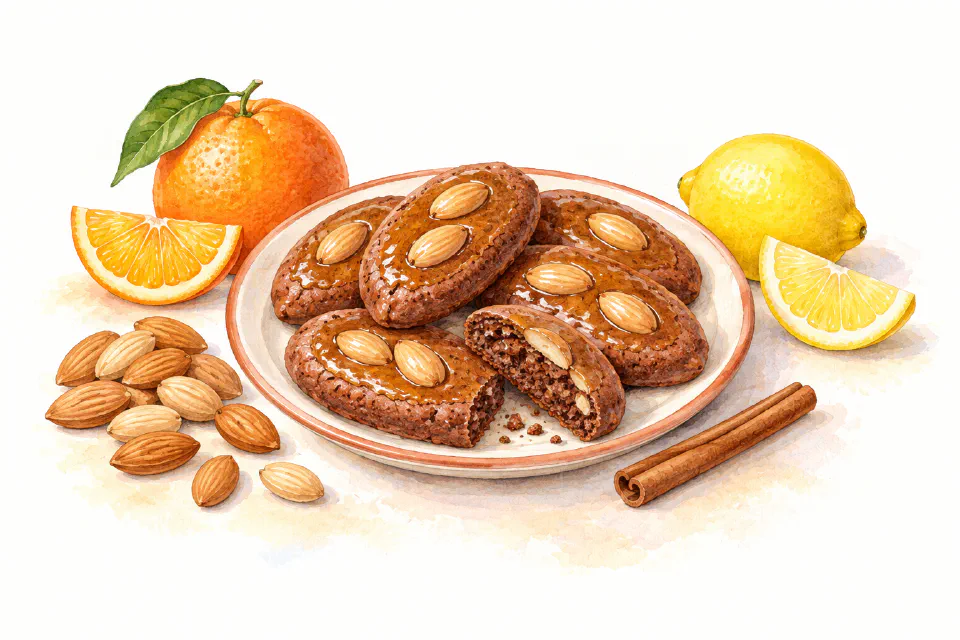
Ingredients
Have your ingredients ready? Go to instructionsInstructions
- Mix dry ingredients: In a large bowl, combine the flour, ground almonds, sugar, cocoa powder (if using), ground cloves, ground cinnamon, orange zest, and lemon zest. Mix well to distribute the spices evenly. Stir in the candied peel if using.
- Add liquids: In a separate small bowl or jug, mix together the honey, freshly squeezed orange juice, and water. Gradually add this liquid mixture to the dry ingredients, mixing with a wooden spoon or your hands, until a firm but pliable dough forms. The dough should not be sticky - if it’s too dry, add a little more water; if too wet, add a bit more flour or ground almonds.
- Shape: Divide the dough into 10-12 equal portions. Roll each portion into an oval log shape about 10-12cm long and 4-5cm wide. Place on a lined baking tray with space between them. Flatten each one slightly with your palm. Press 2-3 whole almonds gently into the surface of each biscuit for decoration.
- Bake: Preheat oven to 160°C (fan 150°C). Bake for 20-25 minutes until firm to the touch. The biscuits should remain slightly soft inside but firm on the outside - they will harden further as they cool. Do not overbake or they will be too hard.
- Glaze: While the biscuits are still warm from the oven, brush the tops generously with warmed honey for a beautiful shine and extra sweetness. Allow to cool completely on a wire rack before storing.
Kwareżimal are traditional Maltese Lenten biscuits, eaten during the 40 days of Lent. These distinctive treats contain no eggs, butter, or dairy, making them suitable for fasting traditions. They are dense, aromatic, and wonderfully rich with ground almonds, citrus zest, and warm spices. The name comes from “Quaresima,” the Italian word for Lent.
Ingredient Substitutions Outside Malta
Plain flour is all-purpose flour. Ground almonds should be unsweetened; marzipan is not a direct replacement. Candied citrus peel is often labelled mixed peel and can be omitted here as the ingredient list allows. Check the baking guide if the sugar, almond, or flour labels differ from those you know.
Serving Suggestions
- Best eaten after 1-2 days when the flavours have deepened and mellowed
- Traditionally enjoyed with strong black coffee or Maltese spiced coffee
- Perfect for dunking
- Often given as gifts during Lent
- Can be packaged beautifully for Easter presents
- Excellent alongside afternoon tea
Traditional Notes & Tips
- The name “Kwareżimal” comes from “Quaresima,” meaning Lent
- Older traditional recipes omit cocoa completely - the chocolate version is a more modern variation
- The texture should be firm and slightly chewy - not crumbly like a shortbread biscuit
- They are intentionally plain and not overly sweet, reflecting the penitential nature of Lent
- Keep well in an airtight container for up to a week, sometimes longer
- Some families add a splash of whisky or rum to the dough
- The honey glaze is essential - it adds moisture and shine
- Don’t skip the whole almonds on top - they’re traditional and add texture
- Ground cloves are strong - measure carefully or they can overpower
- Fresh citrus zest is crucial for authentic flavour
- The biscuits will firm up as they cool - don’t be tempted to bake them until hard
- Traditionally made from Ash Wednesday onwards
- Some bakers add sesame seeds to the dough for extra texture
- Can be made slightly smaller for bite-sized treats
- The dough should rest for 10 minutes if it seems too sticky
- These are naturally vegan, making them suitable for various dietary requirements
- Very dense and filling - one or two with coffee is plenty
Kwareżimal in the Lenten calendar
Visit Gozo’s account of seasonal sweets places the spiced almond biscuit Kwareżimal in Lent, between Carnival’s Prinjolata and Easter’s Figolli.
The recipe above has no eggs, butter, or milk and brings together almonds, citrus, and spice. For a spring baking plan, keep its Lenten association distinct from Figolli’s Easter setting: these are different sweets for different parts of the calendar, not two names for the same almond pastry.