Pastini tal-Coconut
Coconut Macaroons
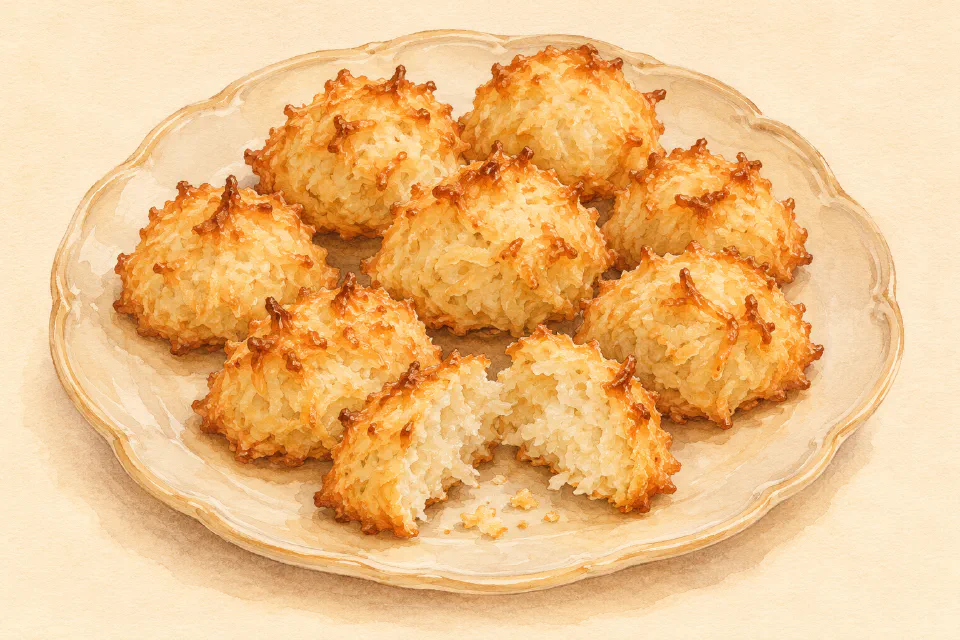
Small coconut macaroons with golden edges and a chewy centre, made with desiccated coconut, egg whites, sugar and vanilla. A simple bake for a coffee platter.
Ingredients
Have your ingredients ready? Go to instructionsInstructions
- Prepare: Heat the oven to 170°C (fan 150°C). Line a large baking tray with baking paper. Weigh the egg whites; 90g is a more reliable guide than egg count alone.
- Mix the whites: Whisk the egg whites with the salt by hand until frothy, about 30 seconds. Stir in the sugar, vanilla and lemon zest. There is no need to whip a stiff meringue.
- Add the coconut: Stir in the desiccated coconut until all of it is moistened. Leave for 10 minutes so the coconut can absorb the liquid. The mixture should be sticky and hold a compact mound when pressed together.
- Shape: Divide into 20 portions. With lightly damp hands or two teaspoons, press each portion into a small rounded mound about 3cm wide. Place on the tray with 3cm between them. Press gently enough to bind the shreds without flattening the mounds.
- Bake: Bake on the middle shelf for 18-22 minutes until the tips and bases are golden and the centres are set, with no wet egg-white mixture showing when one is broken open. If the tops colour before the centres set, cover loosely with foil and continue in short intervals.
- Cool: Leave on the tray for 10 minutes before moving carefully to a rack. Cool completely before storing; the biscuits firm as they cool.
Pastini tal-Coconut are coconut macaroons: small, rough-textured biscuits with toasted edges and a chewy middle. They make a useful addition to a Christmas coffee platter, but are also familiar as year-round bakery sweets.
Choose Fine, Unsweetened Coconut
Use desiccated coconut, the dry, finely shredded kind. Fresh grated coconut, large coconut flakes, coconut flour and sweetened shredded coconut absorb liquid differently and are not direct substitutes in this formula. Coconut flour in particular will make a much drier mixture.
The ingredient list uses egg whites rather than condensed milk. Weigh 90g of whites and keep the sugar separate from the coconut until the wet ingredients are mixed. You need a lined tray, mixing bowl, whisk and scales; a food processor is unnecessary.
A Mixture That Holds Its Shape
After the ten-minute rest, squeeze a teaspoonful together. If it stays loose, press it more firmly before shaping. If it is still too dry to bind, mix in another teaspoon of egg white. If it spreads into a puddle, add desiccated coconut a teaspoon at a time and rest again before portioning.
Keep the mounds similar in size so they finish together. A lightly golden outside and a set, moist centre are the aim. A wet centre needs more baking; cooling does not cook raw egg white. Let the macaroons firm on the tray before lifting them.
Coconut Macaroons and Almond Macaroons
These are different from Biskuttini tal-Lewż, which use ground almonds. They are also different from smooth French sandwich macarons. The rough coconut surface is part of the biscuit’s texture, and there is no filling or decorative topping in this version.
Serving and Keeping
Serve fully cooled with Maltese coffee or tea. For best texture, bake on the day or the day before serving. Keep the cooled macaroons in a closed container in the fridge and eat within two days, or freeze for a longer make-ahead. Take out just the portions you plan to serve. These biscuits contain egg; check the other ingredient packets if cooking for someone with allergies.
A Maltese Bakery Sweet
TVM’s report from a Qormi bakery at Christmas lists coconut pastini among traditional sweets made throughout the year alongside the bakery’s seasonal Christmas selection. It documents their place in the bakery, rather than supplying this recipe. The quantities and method here are a home version.
Choose other small sweets from the Maltese Christmas collection or the Advent recipe guide.