Pastizzi tal-Piżelli (Maltese Pea Pastries)
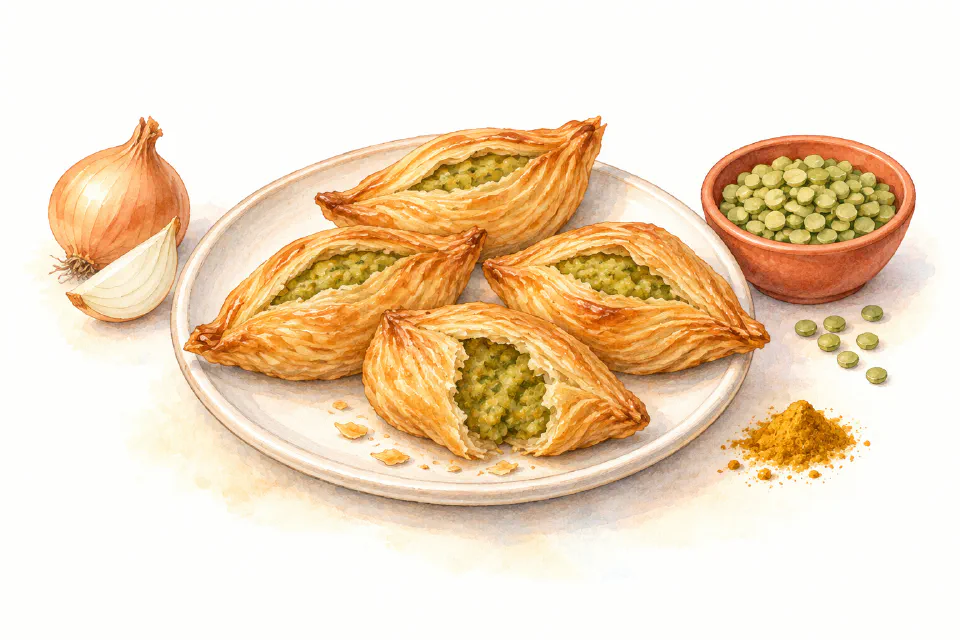
Classic Maltese flaky pastries filled with spiced mushy peas. Crisp, savoury, and a favourite from every pastizzeria.
Ingredients
Have your ingredients ready? Go to instructionsInstructions
- Cook the peas: Drain the soaked split peas and place in a saucepan with fresh water to cover. Simmer for 30-40 minutes until very soft, then drain well.
- Make the filling: Heat the olive oil in a pan and cook the onion for 5 minutes until soft. Add the garlic, curry powder, cumin, and chilli flakes if using. Stir in the cooked peas and mash roughly. Season with salt and pepper, then cool completely.
- Make the pastry: Mix the flour and salt. Start with 250ml cold water and add more only as needed to make a workable dough. Knead until smooth and elastic, then cover and rest for 20 minutes.
- Layer and chill: Lightly oil the work surface and stretch or roll the dough into a thin rectangle without tearing it. Spread with half the softened margarine or butter, leaving the edges clear. Fold into thirds like a letter, cover, and rest for 20 minutes. Gently roll out again, spread with the remaining fat, and fold into thirds once more. Chill for at least 30 minutes until firm but still workable.
- Shape: Divide the chilled dough into 12 pieces and roll each into a thin oval. Divide the cooled filling between them, leaving the edges clear. Bring the long edges up around the filling and pinch the ends together to make a small boat, leaving a narrow opening along the middle. Place on a lined baking tray with space between them.
- Bake: Preheat the oven to 220°C (fan 200°C). Bake for 20-25 minutes until the pastry is deeply golden and cooked underneath as well as on top. Rotate the tray if it browns unevenly, and allow longer if needed for thicker pastries.
Ingredient Guide
- Dried split peas: The quantity is weighed before soaking. Cook until they mash easily, then drain well so the filling stays thick.
- Onion and garlic: Soften them before mixing with the peas; they should not taste raw in the finished filling.
- Curry powder and cumin: These give this version its warm spice. Curry powders differ, so choose one whose heat you enjoy.
- Plain flour: This makes the pastry dough. Add water gradually rather than assuming the flour needs the full amount.
- Butter or margarine: Use a firm baking product softened enough to spread. Low-fat tub spreads contain more water and are less suitable for layering.
Ingredient Substitutions Outside Malta
Dried split peas are usually available with dried beans and lentils. Fresh or frozen garden peas give a sweeter, looser filling and are not a direct substitute for the dried weight and cooking time here.
Ready-made puff pastry is a shortcut if you mainly want to make the filling. Cut enough pieces for 12 pastries and follow the pastry pack’s baking guidance, checking the underside is cooked. The shape and layers will differ from the homemade version.
For vegan pastizzi, choose a dairy-free baking fat or vegan pastry and check the curry powder. Butter makes the version above non-vegan, even though the pea filling contains no animal ingredients.
Tips for Filling and Shaping
- The pea mixture should sit in a mound on a spoon. If wet, return it to the pan briefly to evaporate moisture before cooling.
- If the dough keeps springing back, cover and rest it before stretching again. Forcing it can tear the layers.
- If fat starts smearing out of the dough, chill it before continuing. Softened fat should be spreadable, not melted.
- Keep filling away from the edges you pinch together and avoid packing the pastries too full.
- Cook until the base is coloured as well as the top; a pale underside may still be doughy.
How to Serve Pea Pastizzi
Serve warm as a snack, or alongside Pastizzi tal-Irkotta to offer both fillings. Try Qassatat tal-Piżelli for another pea-filled pastry, or pair with Maltese coffee. Explore more doughs in our baking and pastry collection.
For a side-by-side comparison of the ricotta and pea fillings, shaping checks, and reheating advice, use the pastizzi guide.
Storage and Reheating
Refrigerate within two hours; eat within 48 hours or freeze. Reheat once, until the centre is hot. FSA guidance.
Use an oven to restore some crispness; a microwave softens the layers. Store the cooked filling separately if making it ahead, and use it cold for shaping.
Frequently Asked Questions
Are pea pastizzi vegan?
The filling in this recipe is vegan, but the pastry is only vegan when made with a suitable dairy-free fat. Check ready-made pastry ingredients too.
Why did the filling leak out?
It may have been too wet or warm, or the pastries may have been overfilled. Cool and thicken the filling before shaping, and keep the pinched ends free of peas.
Will these have exactly the same layers as bakery pastizzi?
No. This folded home method is simpler than the stretching and rolling used for traditional bakery pastry. For this version, focus on cool dough, thin shaping, and a fully baked base.
Pea and ricotta: two familiar choices
Pea and ricotta are familiar pastizzi fillings in Camilleri’s account of Maltese snacks. His description also distinguishes pastizzi from the larger, bag-shaped qassatat. See Maltese Folklore, printed pages 197–198.
Here the peas are seasoned with curry powder. For a mixed batch, keep pea and ricotta pastries identifiable so everyone can choose their filling; changing the filling does not turn a pastizz into a qassata.