Qassatat tal-Għid (Gozitan Easter Cheese Pastries)
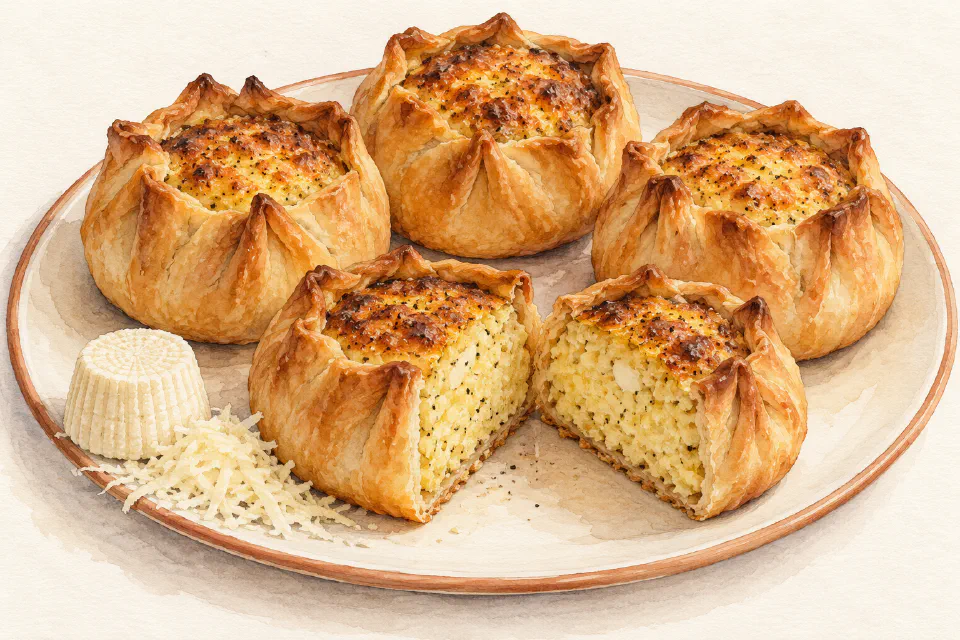
Gozitan Easter qassatat with a firm yeasted pastry and a peppery filling of grated dry sheep's-milk ġbejniet and eggs.
Ingredients
Have your ingredients ready? Go to instructionsInstructions
- Make the dough: Mix flour, yeast and pastry salt. Rub in the margarine until evenly dispersed. Add 220ml water and mix, adding a little more only as needed to form a firm dough. Knead for 8-10 minutes until smooth. Cover and leave for 1-1½ hours until visibly risen and puffy.
- Mix the filling: Put the grated dry ġbejniet and pepper in a bowl. Work in about two eggs’ worth of the beaten egg, then add the remainder a little at a time until the mixture is thick and spoonable. You may not need it all; stop before it becomes runny. Fold in raisins if using. Do not add salt before considering the saltiness of the cheese. Cover and refrigerate until assembly.
- Divide: Knock back the dough gently and divide into 12 equal balls. Cover and rest for 15 minutes. Heat the oven to 190°C (fan 170°C) and line two trays.
- Shape: Roll each ball into a circle about 14cm across and 2-3mm thick. Put a share of filling in the centre, leaving a generous border. Lift the border around the filling, making overlapping pleats and pressing each fold firmly so it holds. Leave a small open centre and room for the filling to puff.
- Glaze and bake: Brush the pastry with the egg-yolk glaze, keeping it off the exposed cheese. Arrange apart on the trays. Bake both trays for 30-40 minutes, swapping their positions partway through, until the pastry is golden and the cheese filling is puffed, browned on top and set through the centre.
- Rest: Leave on the trays for 10 minutes before serving warm. The filling settles slightly as it cools.
Start with Dry Ġbejniet
Use plain, dry sheep’s-milk cheeselets that are firm enough to grate. Weigh the grated cheese because cheeselets vary in size. Fresh moist ġbejniet or ricotta absorb a different amount of egg and do not replace the dry cheese directly in this recipe.
Read the Maltese cheese guide when choosing between fresh, dried and peppered ġbejniet. For a fresh ricotta filling, use the separate Qassatat tal-Irkotta recipe.
Add the Eggs Gradually
The dryness of the cheese determines how much egg it needs. Aim for a filling that sits in a mound on a spoon. Too much egg makes it spread into the pleats before the pastry has time to set.
Raisins are optional and bring little sweet notes against the salty cheese. Keep them chopped small enough to sit within the filling.
Keep Their Spring Setting
The Easter name and dry-cheese filling distinguish this preparation within the wider qassatat family. Use the Easter food collection to plan it alongside other spring bakes.
Keeping
Cool leftover pastries and refrigerate within two hours. Eat within two days or freeze. Thaw in the fridge and reheat until piping hot throughout, protecting the tops loosely with foil if they brown too quickly.