Żeppoli ta' San Ġużepp (Maltese St Joseph's Pastries)
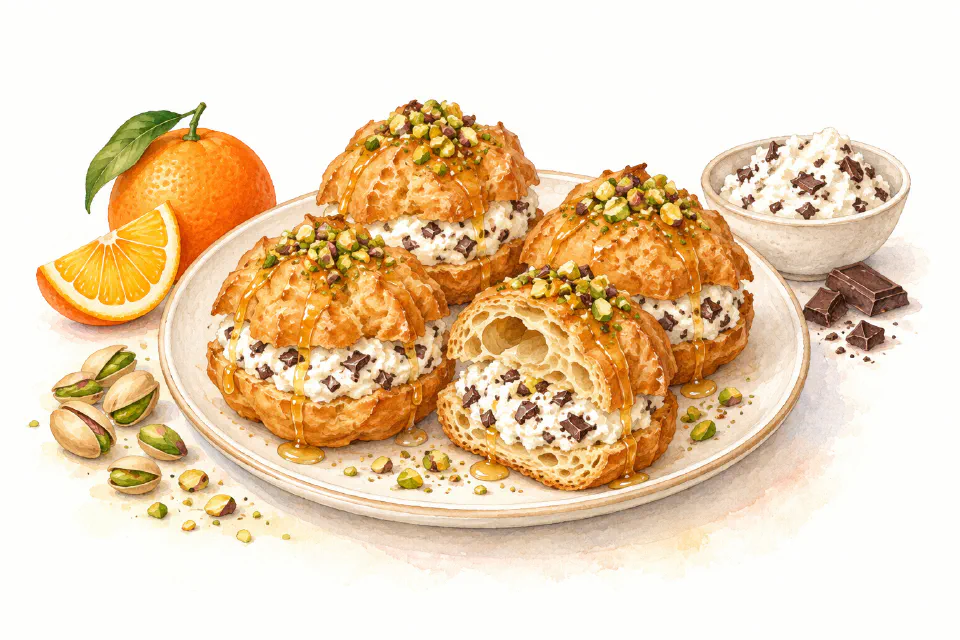
Traditional Maltese St Joseph's pastries filled with sweet ricotta and finished with honey, nuts, or icing sugar.
Ingredients
Have your ingredients ready? Go to instructionsMeasures: 1 tbsp = 15ml; 1 tsp = 5ml. For local ingredient names and substitutions, see our guide to Maltese ingredients abroad.
Instructions
- Make the choux pastry: Put the water, butter, and salt in a saucepan and bring to a boil. Add the flour all at once and stir vigorously until the dough pulls away from the sides. Cool for 5 minutes.
- Add the eggs: Beat in the eggs one at a time until the dough is smooth and glossy.
- Fry: Heat oil to 170°C. Drop spoonfuls of dough into the oil and fry until puffed, golden, and cooked through, turning often. Drain on kitchen paper.
- Make the filling: Mix the ricotta with icing sugar, orange zest, vanilla, and chopped chocolate.
- Fill and finish: Split the cooled zeppoli and fill with ricotta. Drizzle with honey and sprinkle with nuts, or dust with icing sugar.
Żeppoli ta’ San Ġużepp are traditional Maltese pastries associated with the feast of St Joseph. They are made from light fried choux pastry and filled with sweet ricotta, citrus, and chocolate.
Serving Suggestions
- Serve on St Joseph’s Day or during festive gatherings
- Finish with honey and chopped pistachios
- Dust with icing sugar for a simpler version
- Best eaten the day they are made
Traditional Notes & Tips
- The ricotta should be well drained so the filling stays thick
- Fry at a steady temperature so the centres cook through
- Some versions are baked rather than fried
- Orange zest is a classic flavour with the ricotta
- Fill shortly before serving for the best texture
Pastries for St Joseph's Day
Camilleri associates sweet ricotta-filled Żeppoli with St Joseph’s feast on 19 March. See Maltese Folklore, printed page 199.
That occasion is distinct from Easter Sunday, even though both sit in the spring calendar. The version above pairs the filling with honey, nuts, or icing sugar; choose a finish that leaves the ricotta flavour noticeable and fill the pastries close to serving for a crisper shell.