San Martin in Malta: The Feast, the Bag and Autumn Food Traditions
Discover Malta's November feast of St Martin, the story of the shared cloak, Baħrija's celebrations, and the nuts, figs and sweet buns in the borża.
San Martin is celebrated on 11 November, bringing a familiar autumn tradition to Malta: a bag of nuts, dried figs, seasonal fruit and a sweet bun. For children, the anticipation of opening the borża ta’ San Martin is part of the pleasure. Behind the food is the story of a saint remembered for sharing what he had with someone in need.
Who Was San Martin?
St Martin of Tours lived in the fourth century. He served as a Roman soldier before becoming a monk and, in 371, bishop of Tours in what is now France.
His best-known story tells of an encounter with a poorly clothed man suffering from the cold. Martin cut his military cloak in two and gave half to the man. In the Christian account, Christ appeared to him in a dream wearing the piece he had given away.
That act of sharing is central to the saint’s place in Maltese tradition. Giving a bag of good things to a child provides a simple way to talk about generosity, gratitude and helping others.
When Is the Feast?
The saint’s feast day is 11 November, in autumn. Community celebrations can take place on nearby days, with church services, activities for children and a fair forming part of the occasion. The date of the feast and the dates of a local programme do not always coincide.
San Martin follows All Saints’ Day and All Souls’ Day earlier in the month. Each has its own traditions: the nuts and sweet bun of San Martin have a different occasion from the almond-filled Għadam tal-Mejtin associated with November remembrance.
The Borża ta’ San Martin
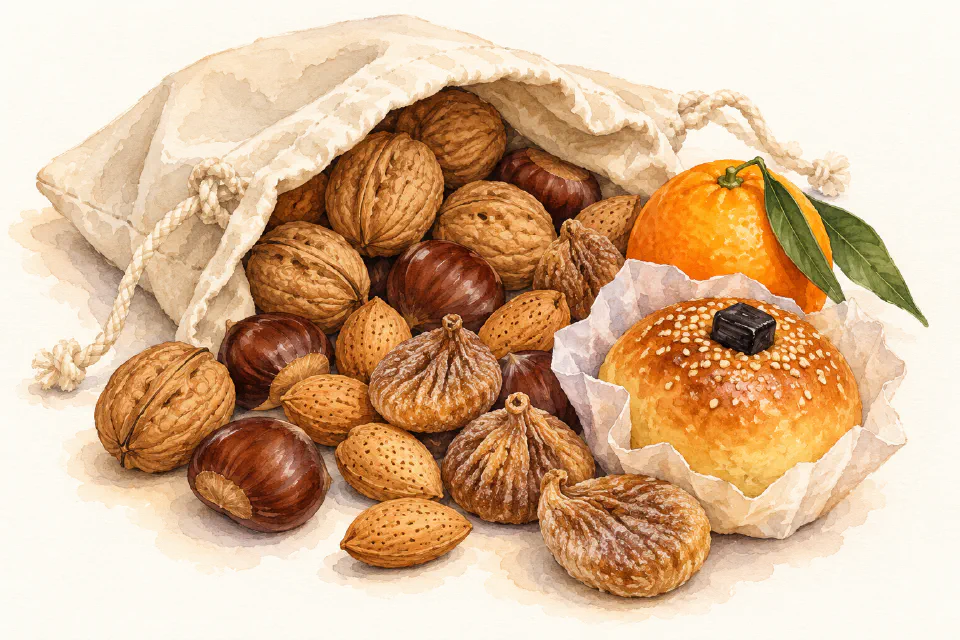
The borża is the gift bag associated with the feast, often a cloth bag gathered at the top with a drawstring. Walnuts, almonds, chestnuts and dried figs are familiar contents, joined by fruit such as an apple, orange, tangerine or pomegranate. A small sweet bun completes the selection.
Contents vary between families. Some add extra sweets, while others keep to nuts, fruit and bread. The custom also has a place in school and children’s activities, where preparing or receiving the bag helps pass the tradition on.
For quantities, wrapping and a shopping list for four bags, follow our borża ta’ San Martin preparation guide.
Ġewż, Lewż, Qastan, Tin
A short traditional rhyme names the foods that make the feast so recognisable:
Ġewż, lewż, qastan, tin,
Kemm inħobbu lil San Martin!
The opening words mean walnuts, almonds, chestnuts and figs. The second line expresses affection for St Martin. The rhyme connects the saint’s name with the treats children look forward to finding in their bags.
Sweet Buns and St Martin’s Cake
Ħobża ta’ San Martin is a soft sweet bun. Aniseed, a shiny sugar glaze and a little liquorice sweet on top are familiar features; our recipe also has sesame seeds. The bun goes into the bag and can be enjoyed on its own with coffee.
Torta ta’ San Martin brings dried fruit and nuts together in a rich bake to slice and share. Family versions differ, including cakes without a crust and versions baked in a pastry case. Our recipe is a crustless date, fig and nut cake.
For an easy accompaniment, walnut-stuffed dried figs use two ingredients familiar from the borża. They are a seasonal serving suggestion here, rather than a separate Maltese feast-day custom.
San Martin in Baħrija
Baħrija, on the outskirts of Rabat, has a particular connection with St Martin. Celebrations at its church include Mass and a procession with the saint’s statue. A traditional fair, organised with the help of local volunteers, is another part of the village’s November celebrations.
The fair and religious festivities bring the occasion beyond the family kitchen and into village life. If you plan to visit, check the announced dates for that year’s programme before travelling.
What Is Is-Sajf ta’ San Martin?
Is-sajf ta’ San Martin means St Martin’s summer. In Malta, the expression describes a spell of fine, warm weather associated with this part of November: a brief return to summery conditions during autumn.
It is a seasonal expression, rather than a promise of sunshine on the feast day. San Martin remains an autumn celebration, whether the day brings warmth, wind or rain.
Bring the Tradition to Your Table
Start with a batch of sweet buns and a few bags to give. If you are inviting people over, add a sliced nut cake and coffee, or prepare roasted chestnuts to serve warm. These are manageable ways to enjoy the ingredients of the season without preparing every dish at once.
Use the autumn and November recipe collection to plan the food, or explore Maltese festa and celebration recipes for other occasions throughout the year.